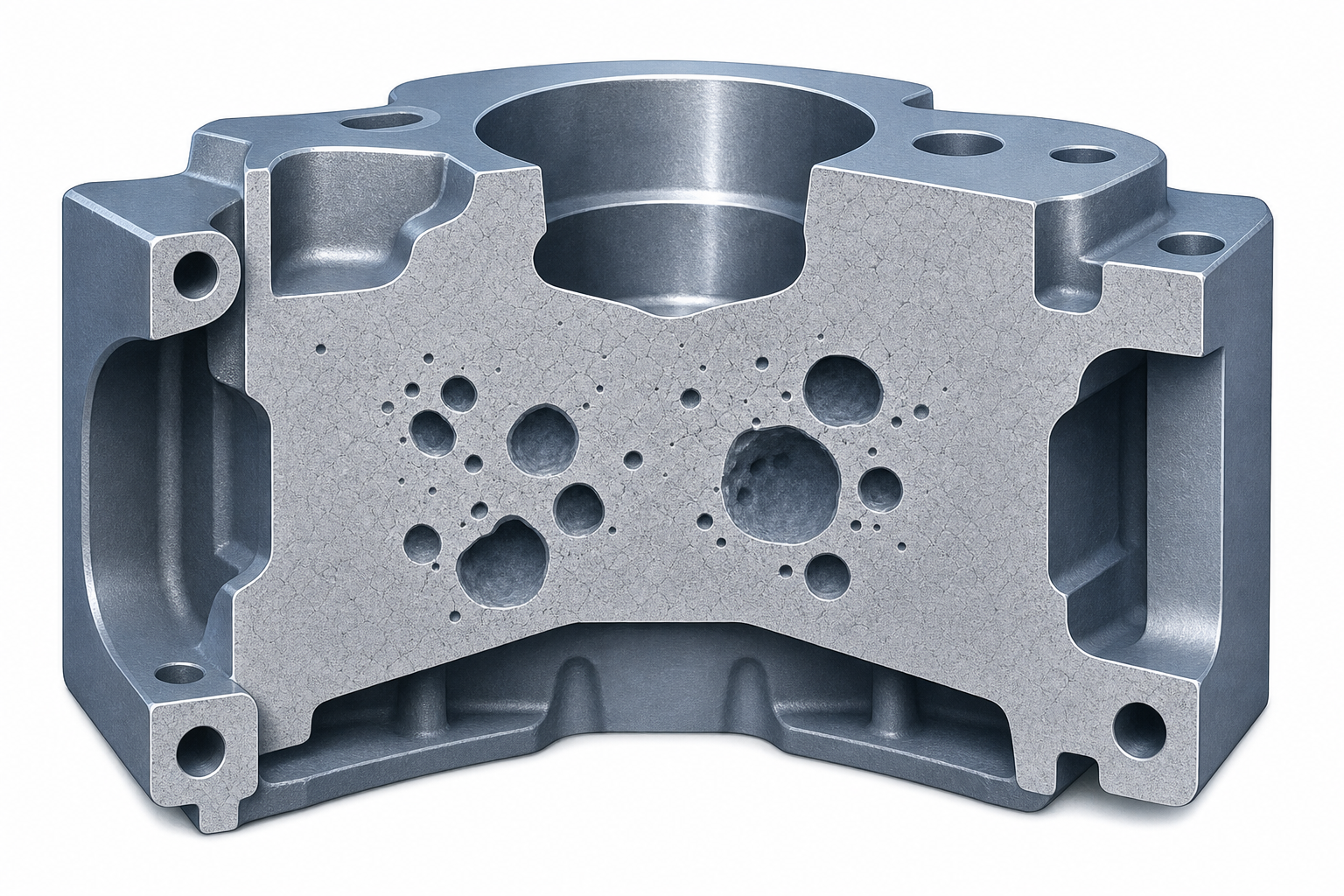
Internal porosities
Without direct consequence but which can become unblocking during machining operations. They are found inside the material and can be revealed by drilling or milling.

Impregnation
The majority of foundry parts are neither gas nor liquid tight. Impregnation is the only process that can definitively resolve waterproofing problems.
The origin of the leaks lies in the method of casting the metals. It is at this stage that the formation coves, sinkholes, porosities and other structural defects. These abnormalities are rarely detectable with the naked eye.
Increasingly complex parts, high quality requirements and cost constraints have made impregnation an essential response. It makes it possible to obtain a seal of up to 10⁻⁶ bars with helium and to withstand very high pressures (800 bars). In many cases, the impregnation is included in the range from the design stage.
Validated process for automotive, aeronautics, gas, hydraulics and food.
The external appearance of the porosity does not make it possible to determine the nature and importance of the defect. Impregnation is recommended after machining but before surface treatment to avoid penetration of stripping products.
Without direct consequence but which can become unblocking during machining operations. They are found inside the material and can be revealed by drilling or milling.
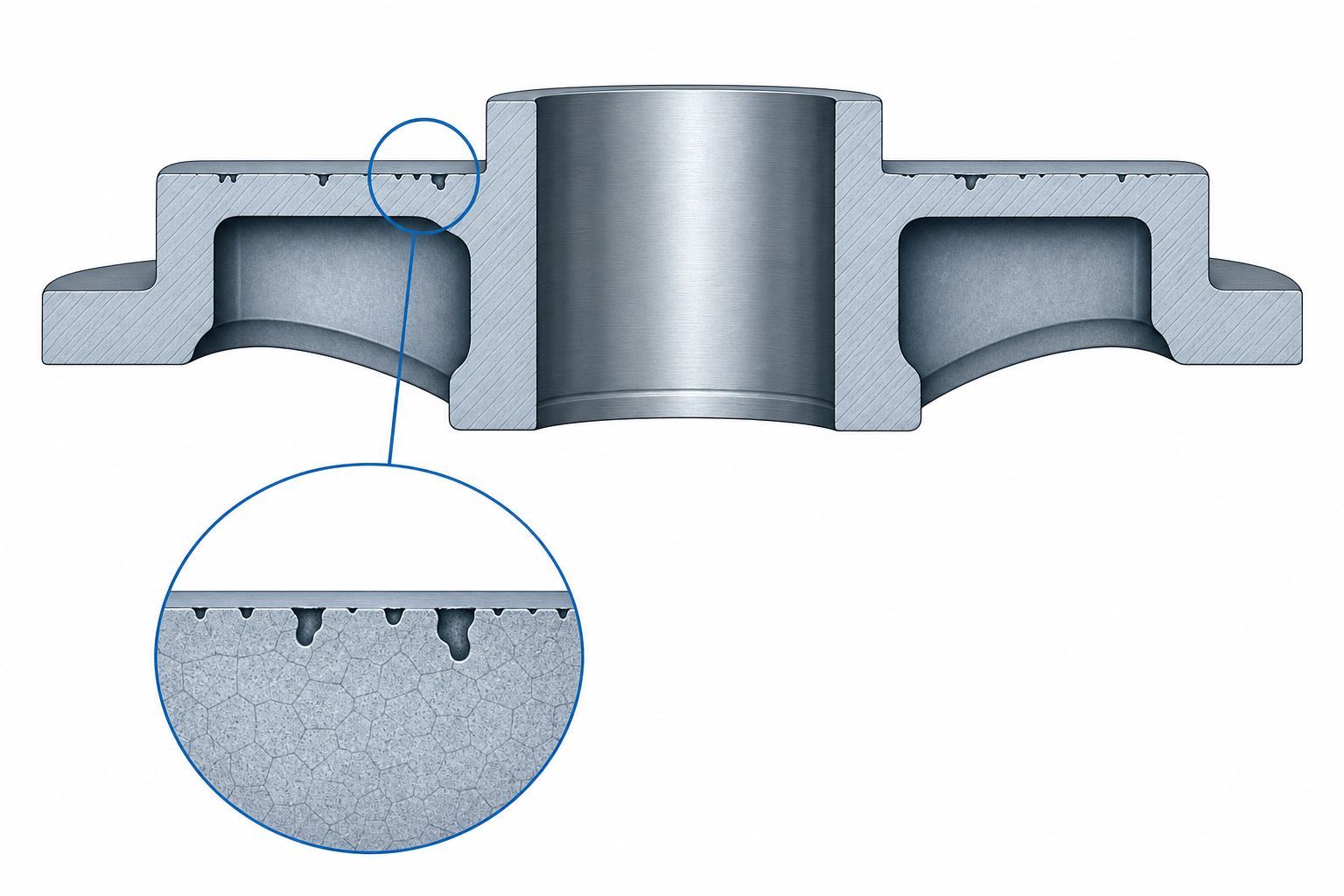
May cause appearance defects: bleeding, oxidation, degassing, stains. They affect the aesthetics and service life of the coatings.
Do you have parts to make waterproof?
Request a studyThe impregnation must be carried out after the machining operations and before surface treatment, because it is during this step that the porosities are revealed.
It can be integrated as a systematic operation on certain highly critical references or used as a targeted retrofit on batches with too high a leak rate. Maldaner can help you define the right compromise.
Discover our process and our services for sealing your parts.