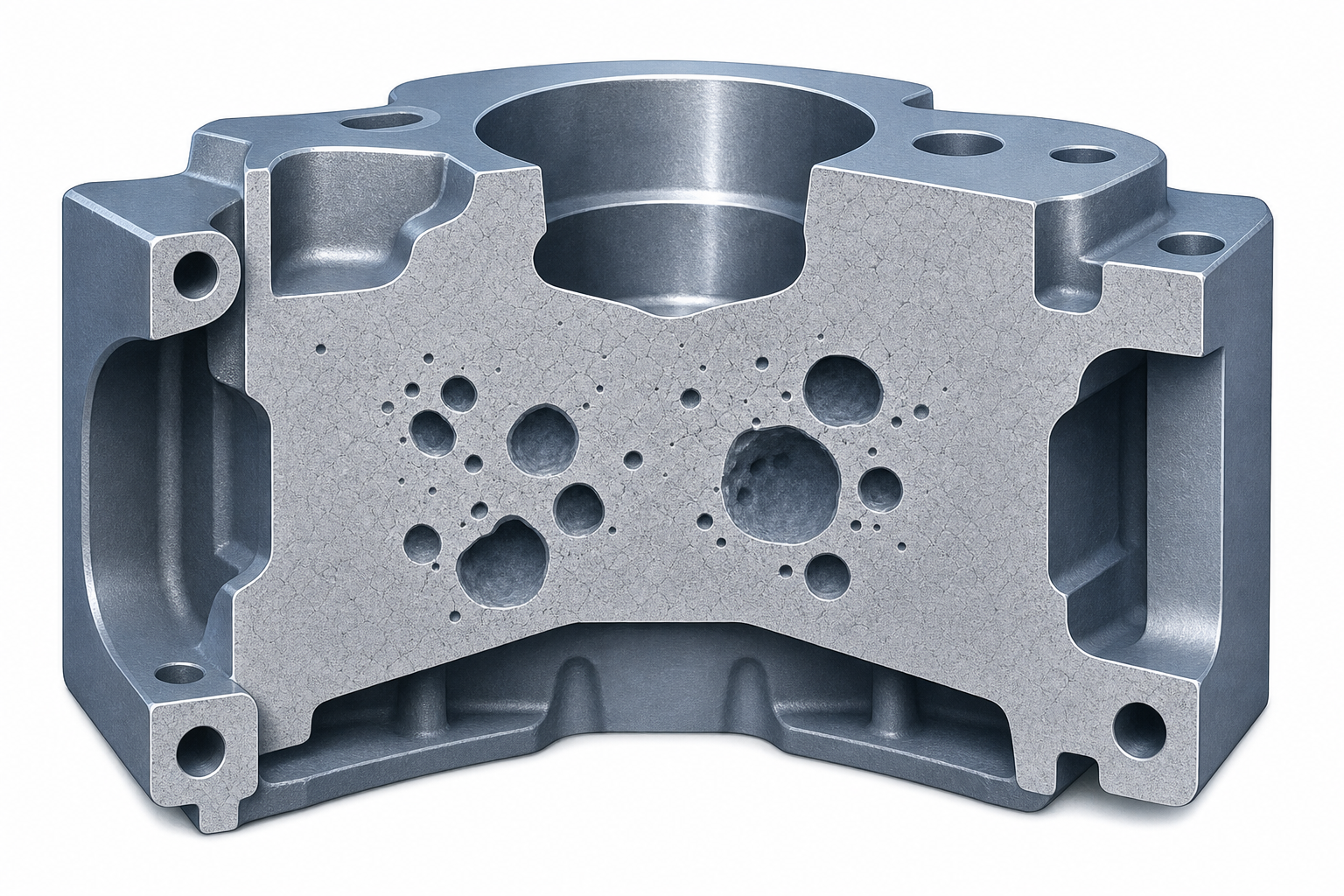
Internal porosities
Located at the heart of the material, they do not emerge on the surface until any machining cuts them. However, they can become exposed during drilling, tapping or surfacing.

Foundry defects
Understand the origin of porosities, their consequences on waterproofing and why impregnation constitutes the most reliable industrial response.
Porosities are inherent to foundry and metallurgy processes. They arise during the solidification of the metal and appear in the form of more or less interconnected cavities.
They can remain invisible until machining or leak testing operations. This is why impregnation is often planned during the design of the most critical parts.
The same part can have several types of porosity, hence the need for global treatment.
Beyond the surface appearance, it is the way in which the porosities communicate with each other and with the outside which will determine the actual tightness of the part.
Located at the heart of the material, they do not emerge on the surface until any machining cuts them. However, they can become exposed during drilling, tapping or surfacing.
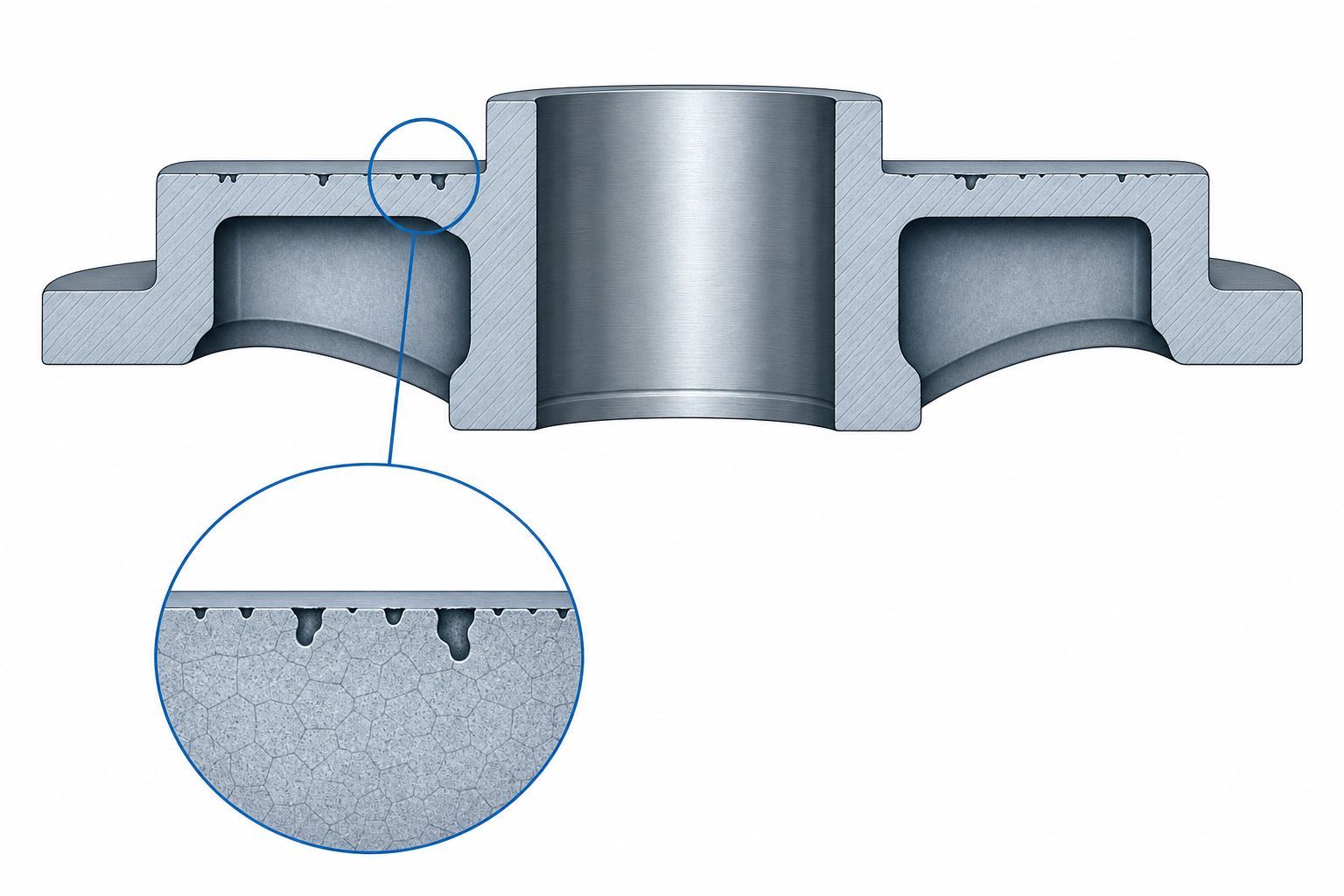
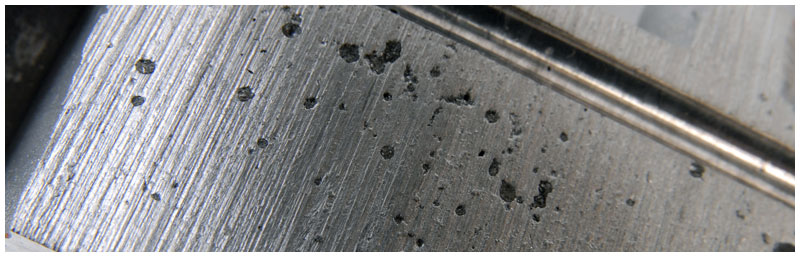
Visible or not to the naked eye, they disrupt the appearance, the durability of the coatings or even the resistance to corrosion (pinholes, pits, blowholes, etc.).
Before considering impregnation, it is necessary to qualify the type of defect encountered. Maldaner can support this diagnostic stage.
Upgrading porous parts without rejecting them, while maintaining their mechanical performance and dimensions.
Avoid fluid leaks (oils, coolants, gases) into hydraulic, pneumatic or thermal components.
Limit the risks of field returns, warranty breakages and material scrap, while stabilizing your first pass rates.
Do you want to analyze a case of porosity on your parts?
Request an impregnation studyFind out why impregnation has become an essential operation and how the Maldaner process works.